
Address
6451 NE Hilltop Ln, Dayton, OR 97114, USA
Phone
Hours
Closed for today
-
Monday
11:00am – 5:00pm
-
Tuesday
11:00am – 5:00pm
-
Wednesday
11:00am – 5:00pm
-
Thursday
11:00am – 5:00pm
-
Friday
11:00am – 5:00pm
-
Saturday
11:00am – 5:00pm
-
Sunday
11:00am – 5:00pm
Reservations
Yes
Address
6451 NE Hilltop Ln, Dayton, OR 97114, USA
Phone
Hours
Closed for today
- Monday 11:00am – 5:00pm
- Tuesday 11:00am – 5:00pm
- Wednesday 11:00am – 5:00pm
- Thursday 11:00am – 5:00pm
- Friday 11:00am – 5:00pm
- Saturday 11:00am – 5:00pm
- Sunday 11:00am – 5:00pm
Reservations
Yes
John and Lena Winter emigrated from Germany in 1929 and settled in Chicago. He was born Hans Viehweg in Hannover and changed his name on gaining citizenship, as many did then. They built a business and raised a family, but loved open country, and in 1961 they bought a fruit and grain farm in the Dundee Hills.
Their daughter Emily and her husband Peter Gladhart met in Ecuador, both serving in the Peace Corps. Twenty years later they left academia in Michigan to come help Emily’s mother with the farm, and in 1990 they planted the first vines — twelve acres of own-rooted Pinot Noir on a former grass seed field. They had no background in viticulture. They read the Oregon Winegrowers Handbook, took classes, hired experienced help, and named the vineyard for Emily’s parents. For years they sold all the fruit; the first wine under their own name came in 1998, at 298 cases.
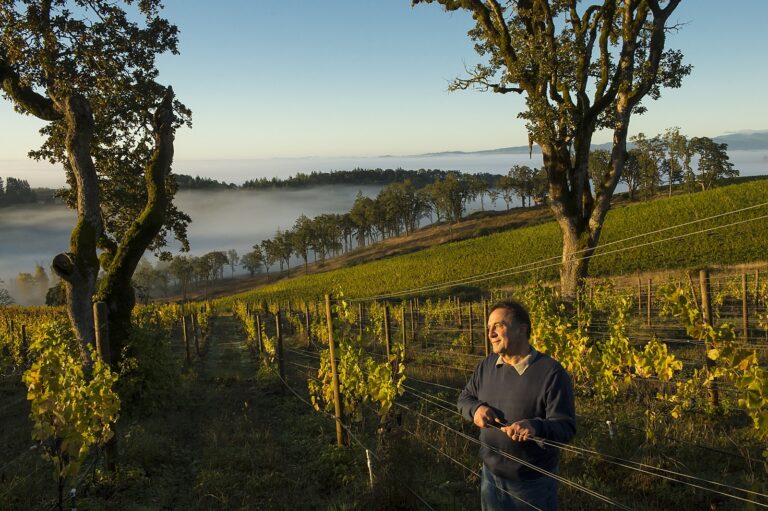
Russell Gladhart was eighteen when those vines went in. He worked the farm through school, then vineyards and wineries in Oregon and New Zealand, always thinking about how it applied back home. He met Delphine, from Lyon, while working an Oregon harvest. The two worked together in Oregon, New Zealand, and finally France, where Russell studied enology and viticulture at the CFPPA in Beaune. They married in 2004, came back, and partnered with Peter and Emily. Delphine made the wine until 2014; Russell has since. Peter died in 2025.
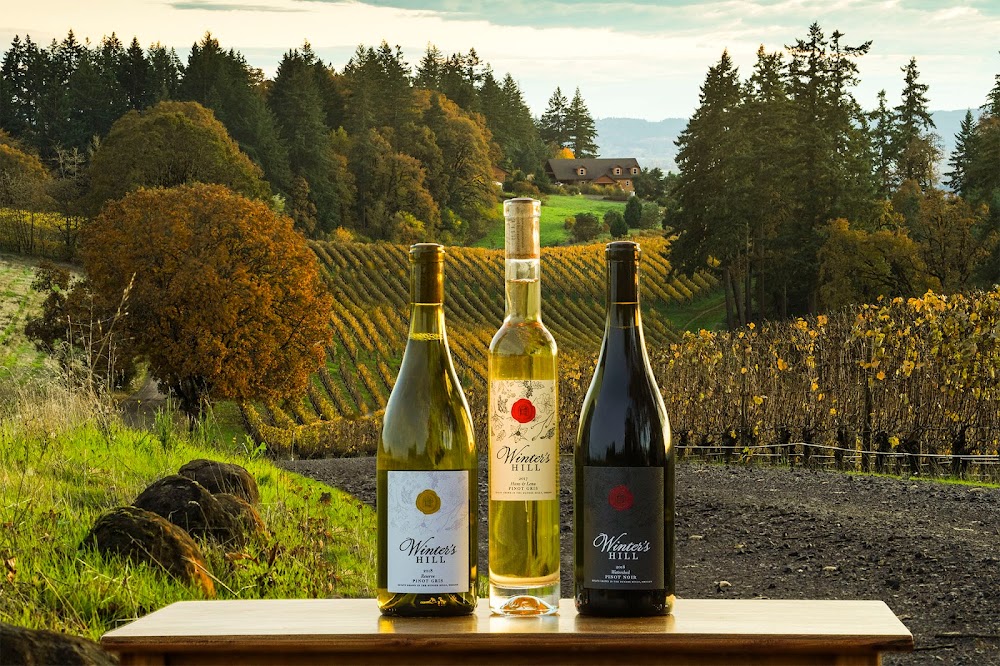
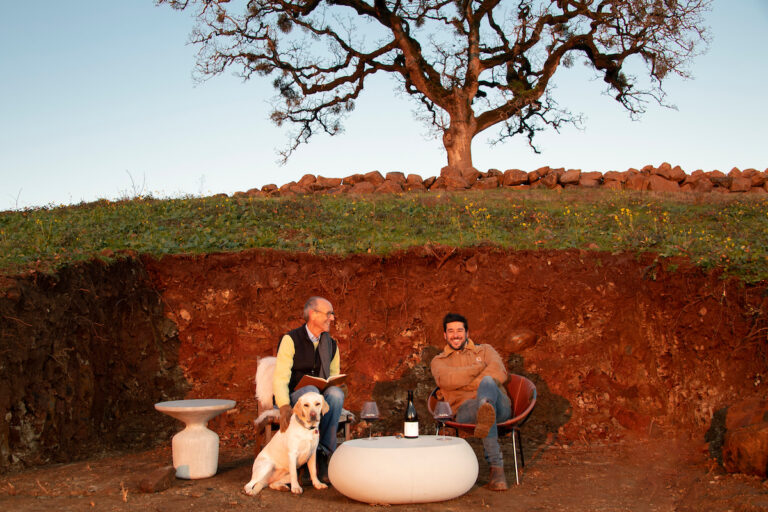
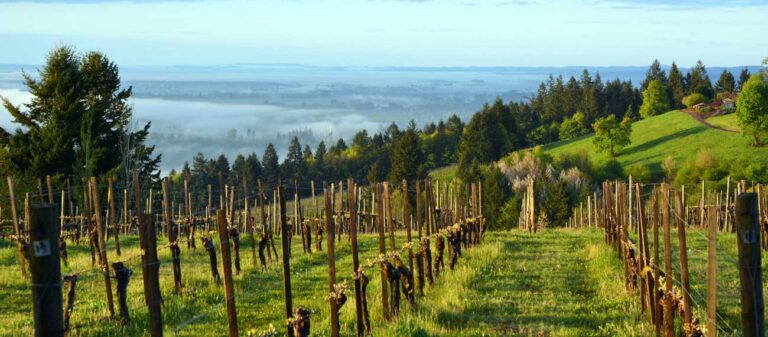
The estate covers roughly 150 acres with 35 planted, between 525 and 750 feet on Jory soil. Over 50 acres are given to oak savanna, managed forest, and pollinator habitat — milkweed, Oregon grape, toughleaf iris, Douglas aster, trillium. They’re a Flagship Farm for the Oregon Bee Project and a collection site for the Oregon Bee Atlas, and they’ve worked with the Xerces Society on hedgerows while pursuing Bee Better and Oregon Tilth Organic certification. They’ve been LIVE and Salmon Safe certified since 1999. Goats graze the vegetation instead of mowers.
Winemaking is restrained: little new oak, structure from the fruit rather than the barrel. More than half the Pinot Noir plantings are Pommard. Single Block wines keep individual parcels separate. Delphine’s dry rosé, introduced in the early 2000s when sweet pinks dominated, remains a favorite. There’s Pinot Gris, Pinot Blanc, and a port-style dessert wine too. They also package in lightweight reusable bottles and 1.5 and 3-liter pouches.
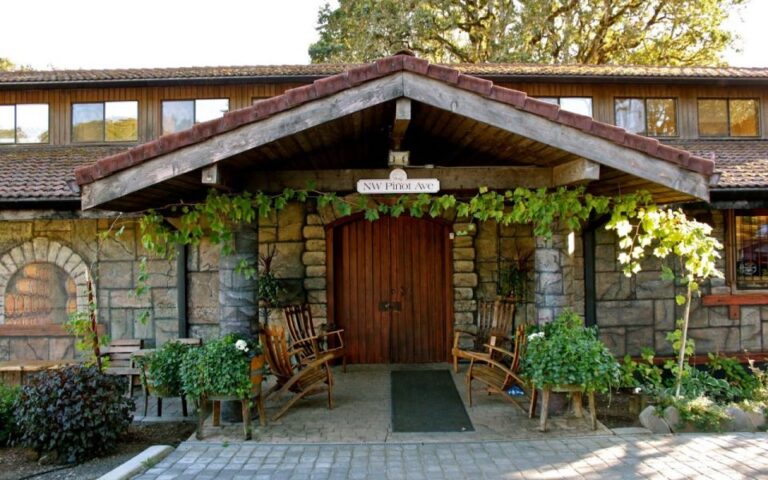
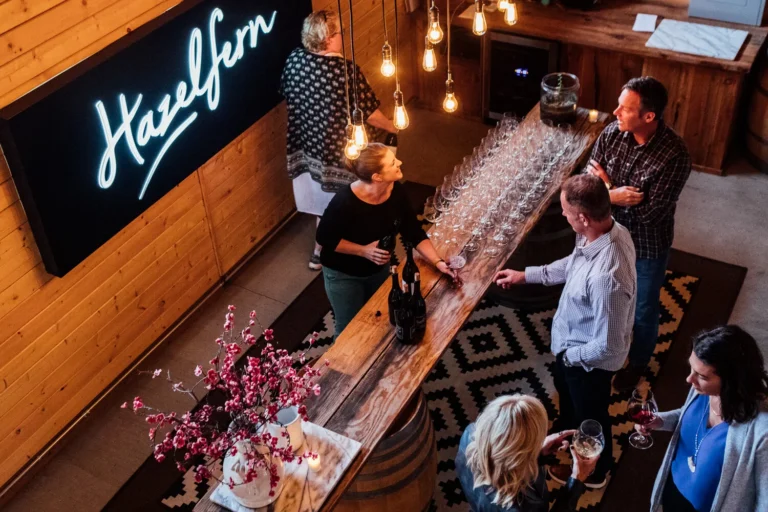
The tasting room is a working winery. You taste at the bar while production happens around you, or on the covered patio when weather allows.
Coming up at Winter’s Hill Estate
Wine in 1.5 and 3-liter pouches, plus lightweight reusable bottles, as part of reducing packaging impact.
Common questions
Do I need a reservation?
Is there food?
Is it family-friendly?
What should I taste?
Will I meet the winemaker?
What’s the conservation work?
What are the pouches?